
Yes, on a clear night you can often see a Cape launch from Orlando. A night launch from Cape Canaveral shows up as a bright light climbing over the trees in the eastern sky before it arcs away over the ocean. For the whole show, the flame, the trail and the sound, you drive east to the Space Coast, where public viewing areas sit as close as about 2 miles from a launch pad. A launch makes an evening out or a full day trip from any of our Orlando homes. For a visitor complex day without a launch, our page on a day trip to Kennedy Space Center from Orlando has the basics.
Seeing a launch from Orlando itself
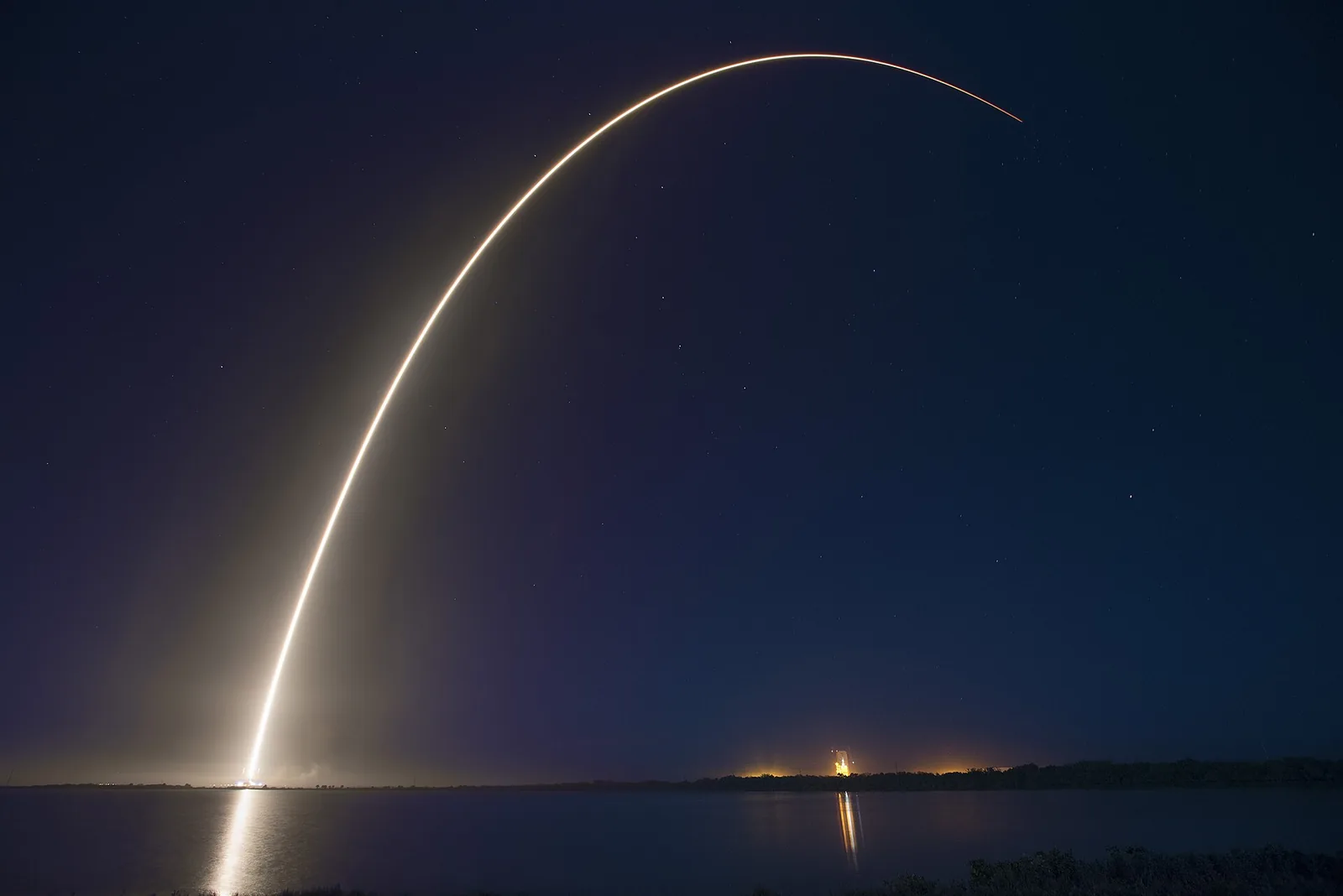
Look east, and look low. The pads at Kennedy Space Center and Cape Canaveral Space Force Station sit on the Atlantic coast, and from Orlando it's a bright light climbing over the trees before it turns out over the ocean. Night launches are the ones Orlando sees best, because the flame stands out against a dark sky and you can follow it for a while. Daytime launches are much harder to pick out from here.
The rocket has to climb a good way before it clears the trees and rooftops between you and the coast. For Artemis II in April 2026, NASA's viewing map told Orlando watchers to look east just after liftoff, and the same timing works as a rule of thumb for any launch. Run the livestream, and about 20 seconds after zero, look low in the east. Visit Space Coast's free Space Coast Launches app has a compass view that shows where on the horizon to look.
A nearby lakeshore, field or open parking lot gives you the clearest view east. Give your eyes a few minutes away from bright lights before the count reaches zero, and bring the kids out a little early so everyone is facing the right way when it starts.
Bigger rockets can sometimes be heard in Orlando; most Falcon 9 launches are a silent show from here. Before Artemis II, forecasters said the rumble of its engines might carry as far as Orlando, and one expert put the hearing range at about 45 miles, roughly the distance to downtown. On booster-landing nights, a sonic boom can reach Orlando too, and the section on booster landings below explains how to know when one is coming.
Why the coast is worth the drive
On the coast you get the whole event: the glow at the pad before the rocket rises, the flame, the sound arriving a few seconds after you see liftoff, and the trail hanging over the water afterward. You also get a crowd that cheers at liftoff and, at some sites, live countdown commentary. Each spot below has its own hours and rules, and the right one depends on the time of the launch and who is with you.
Launch windows open, holds come and go, and a launch can slide to the end of its window or to another day, so the place you wait matters almost as much as the view. A beach with restrooms and shade makes an easier wait than a roadside, especially with kids along. If a launch scrubs, you drive home and try again on the new date.
How a launch fits into an Orlando stay
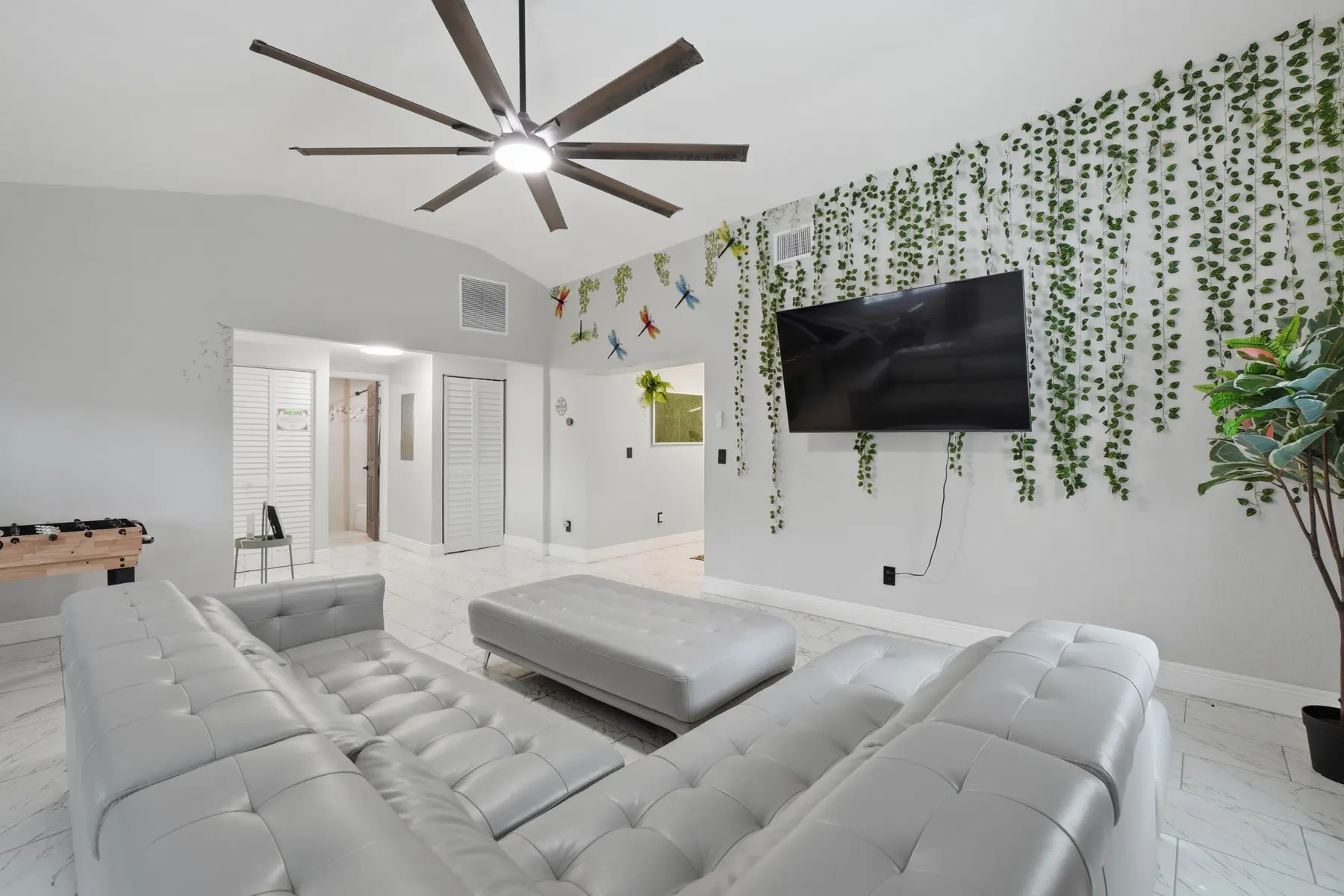
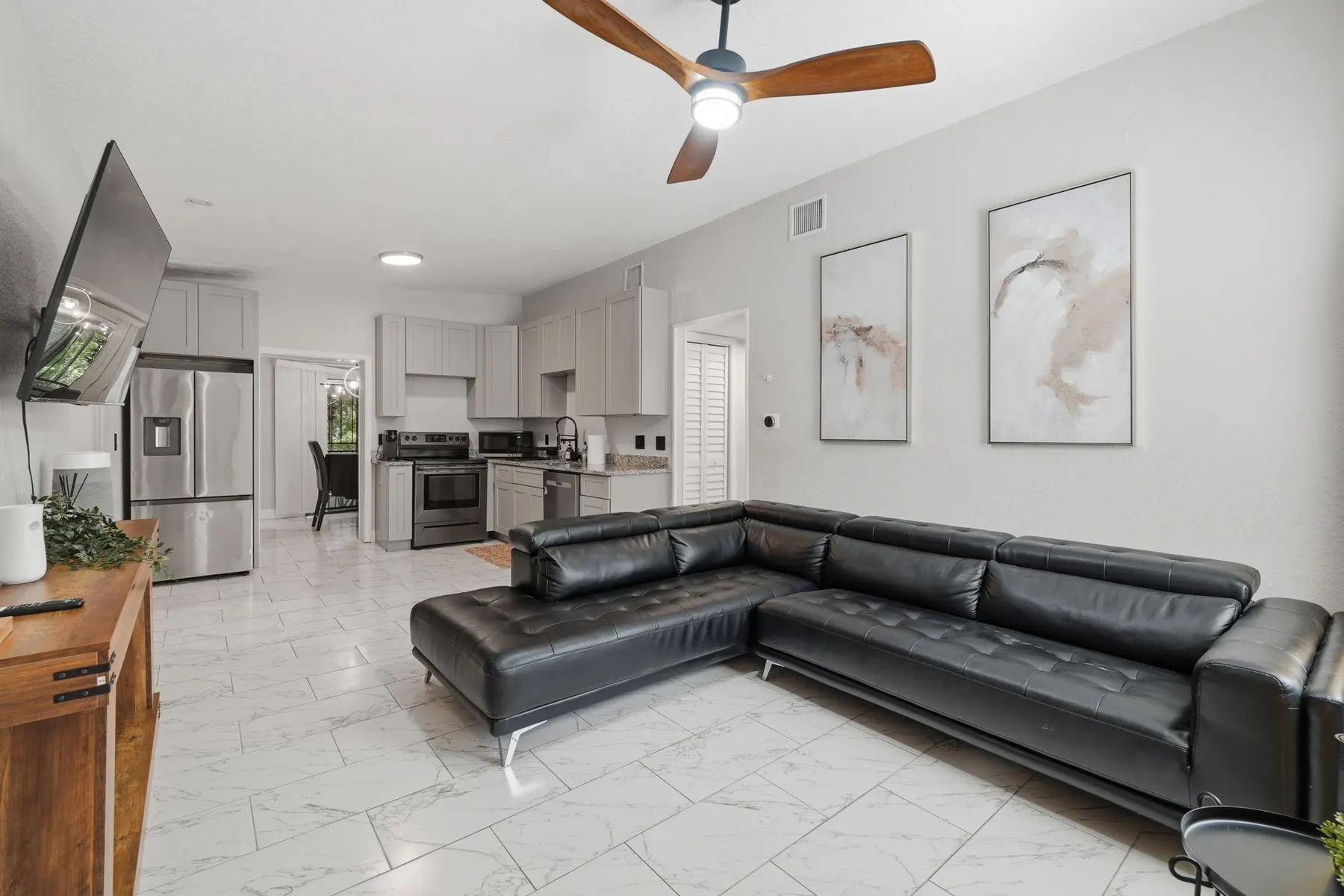
Guests come to Orlando for the parks, a game, a concert or a family gathering, and a launch can be added to any of those trips once it shows up on the schedule. A house makes that easy, because a launch does not need a hotel on the coast. A night launch is an evening out. A morning launch is an early start with breakfast on the road, and a launch at midday pairs with a full day at the visitor complex. Our vacation planning page covers the other trips our guests take from the same homes, and the Orlando events calendar shows what else is on during your dates.
A launch slots into a park week the same way a rest day does. Our guide to renting a house for an Orlando park trip explains how a week of park days works from one of our homes; put the launch on a day with no park tickets, and the theme parks fill the days around it.
A sample launch evening from the house
Here is how an evening launch can run for a family, using a made-up window that opens at 8 p.m. and a spot on the Titusville riverfront. Shift every step to your own launch time and viewing spot.
- Morning. Check the launch provider's page and the Space Coast Launches app for the date and window, then enjoy a slow morning at the house.
- Early afternoon. Make sandwiches, chill the water bottles, charge every phone and load the car with chairs, a blanket, bug spray and binoculars.
- Mid-afternoon. Check the schedule once more and head for the coast, leaving plenty of time for traffic and parking.
- Late afternoon. Park, set up chairs by the water and stretch your legs. In Titusville, the American Space Museum is a short walk from Space View Park.
- Early evening. Eat the packed dinner by the river as the light goes down.
- Window opens. Start the livestream for the countdown. Holds are normal, so stay put until the rocket flies or the team calls a scrub.
- Liftoff. Watch the flame first, then listen for the sound a few seconds later. On a landing night, stay a few minutes more for the sonic boom.
- After. Let the parking lot thin out before you pull away, then drive back to the house and bed.
Launch viewing at the Kennedy Space Center Visitor Complex
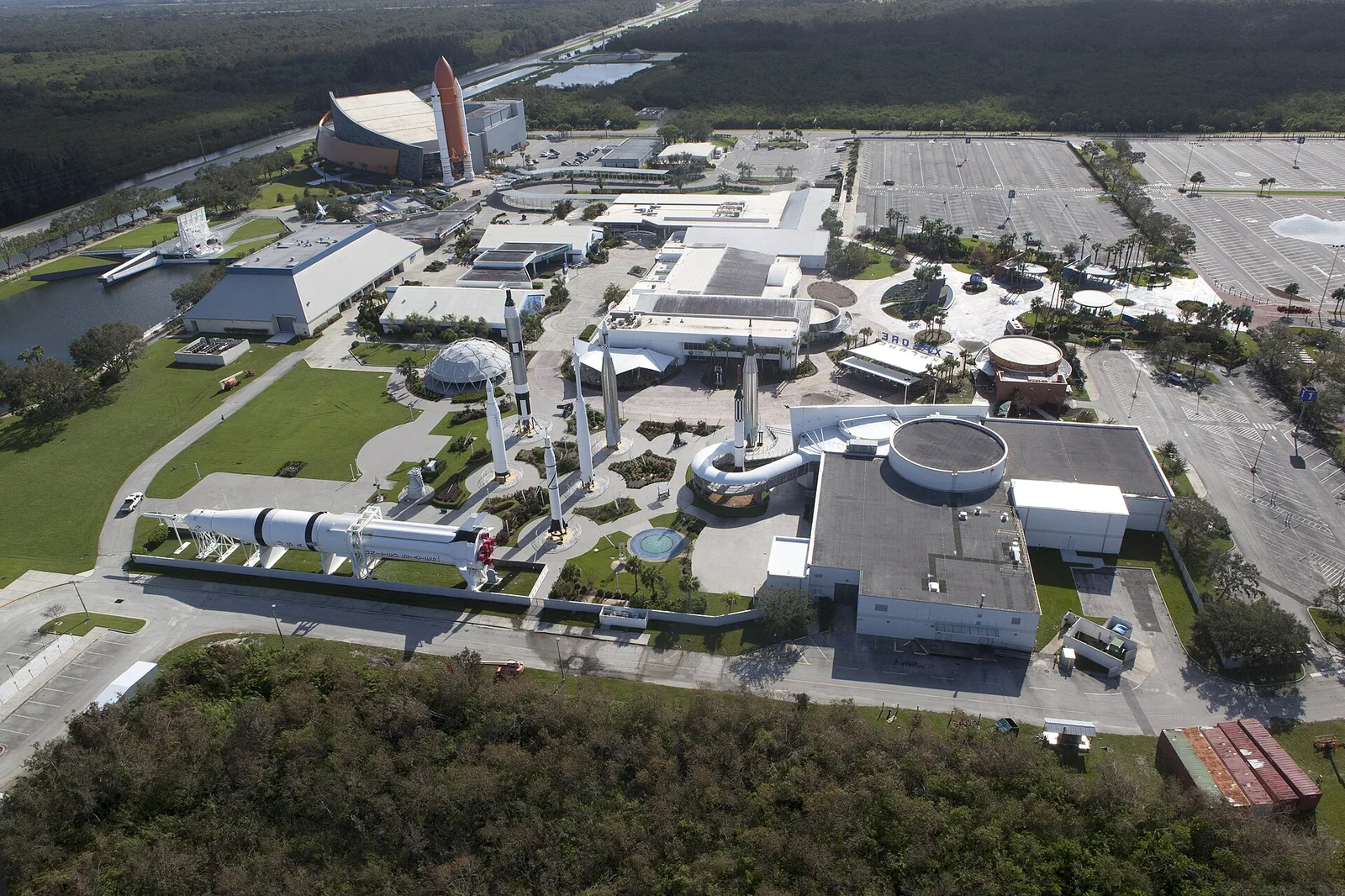
The visitor complex on Merritt Island sells the closest public views of most launches, and it handles the logistics for you. On a launch day it may open one, two or three viewing areas, and which ones open changes with every launch. The visitor complex lists what decides it: the launch window, the pad, its own operating hours, Space Force Range Safety and NASA approval, and how many people are expected.
The main visitor complex
The North Atlantis Lawn at the main complex has live launch commentary, bleachers and lawn seating. It is about 6.7 miles from Space Launch Complex 40, the pad most Falcon 9 launches now use, about 7.1 miles from Space Launch Complex 41, where United Launch Alliance flies, and about 7.5 miles from pad 39A. From the lawn you see the rocket as it rises over the trees. If the launch falls inside operating hours, 9 a.m. to 5 p.m., the attractions, shows, restaurants and shops are around you while you wait.
Banana Creek at the Apollo/Saturn V Center
The Banana Creek viewing area sits next to the Apollo/Saturn V Center and looks across the creek toward the pads. It has outdoor bleachers and open lawn, first come, first served. It is about 3.9 miles from pad 39A, about 5.4 miles from Space Launch Complex 41 and about 6.2 miles from Space Launch Complex 40. The Apollo/Saturn V Center can be closed for private events or other operational needs, so check the launch's own event page before you count on it.
The Gantry at LC-39
The Gantry at LC-39 is the visitor complex's premium viewing area and the closest one to the pads on Cape Canaveral Space Force Station: about 2.3 miles from Space Launch Complex 41 and about 3.4 miles from Space Launch Complex 40. There is no viewing there for launches from pad 39A or pad 39B, for safety reasons. It requires a ticket on top of daily admission, and room on the observation deck itself is limited and first come, first served.
You cannot drive yourself to Banana Creek or the Gantry; ticket holders ride the visitor complex's buses. The buses stay out until the launch flies or scrubs, so bring snacks for the wait.
Tickets
One-day admission is listed at $77 for adults 12 and up and $67 for children 3 to 11, plus tax, and parking is $15 per car, collected at the lot. Buy the kids' and adults' tickets online; guests 55 and over get a lower rate at the ticket windows. For some launches the visitor complex sells a Launch Transportation Ticket, the bus ride out to a closer viewing area, and for the biggest missions it sells launch viewing packages.
A launch viewing package covers two target launch dates plus a return visit within 30 days, and the event page spells out the rest, including what happens to each ticket type if a launch scrubs.
Space View Park and the Titusville riverfront
Titusville faces the launch pads across the Indian River, and on a launch evening its riverfront fills with families on blankets and folding chairs. The City of Titusville lists seven launch viewing places along its shore: Space View Park, the Max Brewer Bridge, the Municipal Marina, Rotary Riverfront Park, Sand Point Park, William J. Manzo Park and Riverfront Park. Each one looks out over open water, which is the view a launch needs.
Visit Space Coast calls Space View Park one of the most popular launch viewing areas on the coast, and the city puts it less than 15 miles directly across from the launch pads. The park carries the U.S. Space Walk of Fame monuments to the Mercury, Gemini, Apollo and Space Shuttle programs, with the names of people who worked on them engraved in place, and a pier that reaches out into the river. For major launches the park has carried a live audio feed from NASA, so you hear the countdown with everyone around you.
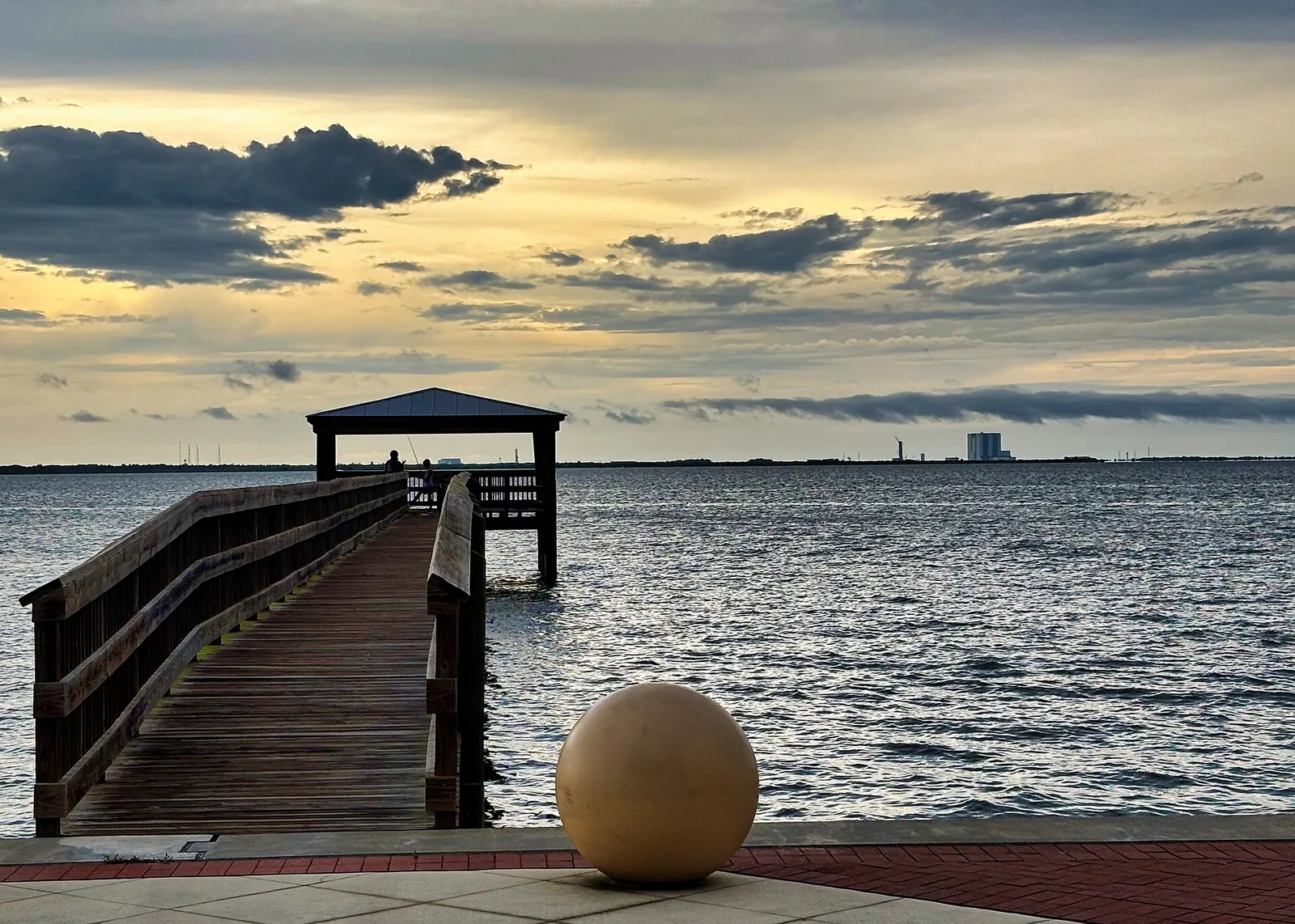
The American Space Museum, at 308 Pine Street, is a short walk from the park and is run by the same nonprofit foundation behind the Space Walk of Fame. It holds spacecraft parts, astronaut suits, working launch consoles and photographs. The museum's own launch-day advice: park at Space View Park, walk over to the museum while you wait, or go after the launch while the traffic clears. With kids who are tired of sitting on a blanket, that is a useful hour.
The Max Brewer Bridge and the parks around it
The A. Max Brewer Bridge crosses the Indian River at Titusville, and it is one of the classic launch spots. For big launches traffic on the bridge stops, and for Artemis II the bridge was closed to cars for an hour after liftoff so the people on foot could clear it. Parrish Park sits beside the bridge on the river, and Sand Point Park and the Titusville Veterans Memorial Fishing Pier are close by. William J. Manzo Park, south of the bridge along U.S. 1, is farther from the pads with an open view of the river, and Rotary Riverfront Park is at 4141 S. Washington Avenue. For the biggest launches the popular spots fill early, so arrive with hours to spare.
Playalinda Beach and Canaveral National Seashore
Playalinda Beach is the Canaveral National Seashore's beach on the Atlantic, and the National Park Service says the Playalinda District offers the closest view of launches. You sit on open sand with the ocean in front of you and Kennedy Space Center down the coast to the south.
Playalinda is for daytime launches: the park closes at 6 p.m. in winter and 8 p.m. in summer, and it opens at 6 a.m. A launch outside those hours cannot be watched from this beach, so check the launch time against the season before you choose it.
Parts of the beach close during launches, so arrive early. Playalinda Beach Road closes between the entry gate and parking lot 1 thirty minutes before liftoff and reopens right after a successful launch or a confirmed cancellation, and parking is allowed only in the beach lots. For headline missions, check the park's alerts page.
Fees
Entrance is $25 per private vehicle, good for seven consecutive days, $20 for motorcycles and $15 per person on foot or by bike, with children under 16 free. A $45 annual park pass covers one vehicle per visit for a year, and an America the Beautiful pass is the only entrance pass you need. The seven-day vehicle pass means a scrubbed launch and a second try later in the week cost one entrance fee.
Jetty Park and Port Canaveral
Jetty Park sits at the mouth of Port Canaveral, with a beach, a fishing pier and cruise ships passing on their way out to sea. Visit Space Coast lists Jetty Park as a launch viewing spot, and for families it is one of the easiest days on the coast: lifeguards, a pavilion, food trucks and a playground in one place. Visit Space Coast also suggests The Cove at Port Canaveral for dockside dining while you wait for a launch window to open.
Passes and hours
Buy your parking pass online ahead of time; the gate takes no cash and no cards. A day pass for a specific date guarantees entry even when the park is full, and for Artemis II the day passes sold out in advance, so for a headline launch, buy as soon as the date firms up. The park is open daily from 7 a.m. to 9 p.m., and lifeguards are on duty from 10 a.m. to 5 p.m. It's a great pick for daytime and early evening launches.
Facilities and rules
The beachside pavilion has restrooms, changing rooms and covered picnic tables, including accessible tables, and food trucks park beside it. The playground has shade structures. Beach wheelchairs are free but limited, with a sign-out form and ID, and mobility mats run down to the sand at Beach Entrance 2. The walk from the entry gate to the boardwalk is about half a mile, so drop off grandparents and gear first if you can.
Pets are allowed only in the Jetty Park campground area, not in the day park or on the beach, apart from trained service animals. On a Jetty Park launch day, the dog stays at the house.
Cocoa Beach, Shepard Park and the pier
Cocoa Beach is the classic beach town of the Space Coast, south of Port Canaveral, and it turns a launch into a beach day. Visit Space Coast lists the Westgate Cocoa Beach Pier and the beaches south of the port as launch viewing spots. From the sand the pads are up the coast to the north, so you watch the rocket climb over the shoreline and arc out over the ocean.
Alan Shepard Park, named for the astronaut, is the city's 5-acre oceanfront park at 299 East Cocoa Beach Causeway, and the City of Cocoa Beach describes it as having an excellent view of space launches. It has beach access, restrooms, showers, 10 large picnic pavilions, covered picnic tables, beach rentals and a children's playground, with shops within walking distance. Park hours are 8 a.m. to 7 p.m., and there are 300 parking spaces.
Parking is $6 an hour or $25 a day through the Passport Parking app; download it the night before. Paid parking runs from 7 a.m. to 7 p.m. every day, weekends and holidays included.
The pier is a landmark in its own right, with the beach running away on both sides of it. A launch morning that ends with an afternoon on the sand at Cocoa, and dinner in town before the drive back, is one of the easiest days you can plan from an Orlando house.
Following the launch schedule
Launches from Florida are announced by the companies and agencies that fly them. Use more than one source, check again the morning of the launch, and check once more before you leave the house.
Where to look
- The visitor complex events calendar. The Kennedy Space Center Visitor Complex posts upcoming launches with viewing options and sends launch alerts by email, with the reminder that dates and times are always subject to change with little notice.
- The Space Coast Launches app. Visit Space Coast's free app has a launch schedule, push notifications, a viewing-location map, a live video feed and the compass that points you at the right patch of sky.
- NASA's launch schedule. NASA lists its own missions, from cargo flights to Artemis, usually with a "No Earlier Than" date until the date firms up.
- The launch providers. SpaceX, United Launch Alliance and Blue Origin each post their own missions with the target date, the launch window and the pad.
Read a listing for three things: the date, the window and the pad. "NET" means no earlier than, so the launch can come on that date or later. The window tells you when to be in place. The pad tells you which viewing areas make sense, since the visitor complex's Gantry, for one, does not open for launches from pads 39A or 39B.
Night launches
Night launches are the ones worth rearranging an evening for. In a long-exposure photo, like the one above, the rocket draws a single arc across the sky, and in person you see a bright flame climbing and then a slow fade as it heads downrange. When you see one on the schedule during your stay, check which coast spots are open at that hour: Jetty Park closes at 9 p.m., Shepard Park at 7 p.m., and Playalinda in the early evening, so for a late launch, look at the Titusville riverfront or the visitor complex's launch tickets, and check their hours for that night.
Launch windows, scrubs and backup days
A launch window is the stretch of time in which a rocket can lift off and still reach the orbit its payload needs. Some windows last a single moment, and some run for an hour or two. Inside a window the team can pause the count, called a hold, and resume, so a launch scheduled for the start of a window may fly at the end of it. Settle in for the whole window and keep the chairs out when the first target time passes.
A scrub means the attempt is called off for that day and a new date and time have to be picked. The visitor complex lists the usual reasons: technical and mechanical issues, range operations and weather. The launch decision belongs to the team running the mission, such as NASA, SpaceX or United Launch Alliance, and Visit Space Coast notes that a launch can scrub minutes, or even seconds, before liftoff.
Plan around the slip
- Our tip: plan the launch early in your week so there's room for a second try. A slip of a day or two then costs you nothing but an evening.
- Pick a backup for the day. A scrubbed afternoon at the visitor complex still leaves the exhibits, and the visitor complex hopes guests will stay and explore after a late scrub. A scrubbed morning on the beach is still a beach day.
- Check before you drive. Look for the new date on the app and the provider's page before you load the car again.
With a house in Orlando, a delay just means another evening drive. You are not paying for a second night at a coastal hotel to wait it out, and the house, the kitchen and the beds are the same ones you left that afternoon. A week-long stay gives you the most room, and our weekly rentals page explains how a week in one of our homes is booked. If a launch slips past your checkout, message us and we'll check if your home is free for extra nights. Guests here for a month or a season, like those on our seasonal stays, can pick whichever launch evening suits them.
What is launching from Florida in late 2026 and 2027
Florida's Space Coast is busier than it has ever been. Cape Canaveral and Kennedy Space Center hosted a record 109 launches in 2025, and the commander of the Space Force's Space Launch Delta 45 projected somewhere between 100 and 120 for 2026. Most of them are SpaceX Falcon 9 launches. Here is what is on the books, marked by how firm it is.
Falcon 9 and Falcon Heavy
SpaceX announced in early 2026 that all Dragon missions, crew and cargo, would fly from Space Launch Complex 40 at Cape Canaveral, along with most other Falcon 9 launches, while pad 39A at Kennedy focuses on Falcon Heavy. Falcon Heavy carried NASA's Nancy Grace Roman Space Telescope from Kennedy Space Center on August 30, 2026. The next one on the books is Astrobotic's Griffin-1 Moon lander, which was scheduled to launch on a Falcon Heavy in the fourth quarter of 2026, with no specific date announced as of the last update we found. Individual Falcon 9 missions change too often to list here.
Starship at pad 39A
The FAA published records of decision on January 30, 2026 permitting up to 44 Starship launches a year from pad 39A, and SpaceX said it hoped for its first Starship launches from Florida later in 2026. As we write, no first Florida Starship date has been announced on an official page. Treat Starship from Florida as expected until a date is posted, and watch SpaceX's own announcements.
New Glenn
Blue Origin expects to fly New Glenn again from Launch Complex 36 at Cape Canaveral, and Jeff Bezos has said the company aims to do it before the end of 2026. In October 2026 Blue Origin also announced plans for more Florida launch pads to raise its flight rate. Treat the next New Glenn launch as expected until Blue Origin posts a date.
Vulcan and Atlas V
United Launch Alliance flies Vulcan and Atlas V from Space Launch Complex 41; check ULA's page for Vulcan and Atlas V dates.
Artemis
Artemis II, the first crewed Artemis flight, launched from pad 39B at Kennedy on April 1, 2026 and splashed down on April 10. NASA has announced Artemis III for 2027, with a named crew of four, as a mission to low Earth orbit that tests docking with the commercial Moon landers being built by Blue Origin and SpaceX, ahead of a planned landing in 2028. It launches on NASA's Space Launch System from Kennedy. If your trip falls near an Artemis launch, book early. Artemis II brought beach closures and sold-out viewing passes, far beyond a normal Falcon 9 evening.
Booster landings and sonic booms
Many Falcon launches end with the first-stage booster flying itself back to Earth to land. When a booster comes back to land at Cape Canaveral, SpaceX issues a sonic boom advisory before the launch. A typical advisory from August 2025 told residents of Brevard, Orange, Osceola, Indian River, Seminole, Volusia, Polk, St. Lucie and Okeechobee counties that one or more sonic booms may be heard during the landing. Orange County, where Orlando sits, is on that list, so on those nights you may hear the boom at the house even if you watched the launch on a screen.
A sonic boom from a landing booster is a short, sharp thump within minutes of liftoff. How it sounds where you are depends on weather and other conditions, and SpaceX says so in its advisories. Not every launch brings one. SpaceX issues the advisory when a booster is coming back to land at the Cape, so the advisory is the way to know whether a given launch will send a boom inland.
On the coast
If you are watching from the coast on a landing night, stay put for a few minutes after the rocket disappears, because the landing follows soon after the launch and the boom carries across the viewing sites too.
Families and pets
Tell children and older relatives about the boom before it happens, so they hear it as part of the show. If your dog is nervous about loud noises, leave the TV on when you head out on a landing night. And when a landing advisory is out for a night you plan to stay in, step outside a few minutes after liftoff and listen for it from the yard.
The drive from our homes and when to leave
By road and without traffic, the Kennedy Space Center Visitor Complex is 71 minutes from Fruit Tree Home in Holden Heights, City and Stadium Sanctuary Vibes and Game Day Getaway-Downtown Orlando in Washington Shores, and Amelia’s Arena Retreat on the downtown edge. Meet. Play. Stay. in Malibu Groves is 73 minutes. Entertainment Home, The Clue House, Piedmont and Cozy Home are 75 minutes. BlueEarth and Downtown & Stadium Cozy Retreat are 78, WinterPark Home is 80, and Wekiwa Home is 81.
The Westgate Cocoa Beach Pier runs one to three minutes longer than the visitor complex from each home. The table puts both side by side, along with the other drive times that matter on a coast day.
| Home | Kennedy Space Center | Cocoa Beach Pier |
|---|---|---|
| Fruit Tree HomeHolden Heights · 3 bd · 2 ba · sleeps 10 | 71 min | 72 min |
| City and Stadium Sanctuary VibesWashington Shores / Lake Sunset · 3 bd · 1 ba · sleeps 8 | 71 min | 73 min |
| Game Day Getaway-Downtown OrlandoWashington Shores · 4 bd · 2 ba · sleeps 13 | 71 min | 73 min |
| Amelia’s Arena RetreatParramore / Downtown Edge · 4 bd · 2 ba · sleeps 8 | 71 min | 74 min |
| Meet. Play. Stay.Malibu Groves · 3 bd · 2 ba · sleeps 9 | 73 min | 75 min |
| Entertainment HomePine Hills · 3 bd · 2 ba · sleeps 11 | 75 min | 77 min |
| The Clue HousePine Hills / Rosemont · 6 bd · 3 ba · sleeps 15 | 75 min | 77 min |
| PiedmontWashington Shores · 4 bd · 3 ba · sleeps 14 | 75 min | 77 min |
| Cozy HomePine Hills · 3 bd · 1 ba · sleeps 8 | 75 min | 77 min |
| BlueEarthHiawassee Villas / Pine Hills · 4 bd · 2 ba · sleeps 7 | 78 min | 80 min |
| Downtown & Stadium Cozy RetreatPine Hills · 3 bd · 1.5 ba · sleeps 8 | 78 min | 80 min |
| WinterPark HomeLockhart / Rosemont · 3 bd · 1 ba · sleeps 8 | 80 min | 82 min |
| Wekiwa HomeHiawassee · 2 bd · 2 ba · sleeps 6 | 81 min | 83 min |
Typical road-routing times without traffic; Orlando rush hours add to the longer routes.
The routes
The visitor complex gives two routes from Orlando. The first runs east on State Road 528, the Beachline, for about 50 miles to the State Road 407 exit on the left for Kennedy Space Center and Titusville, then along SR 407 to its end at SR 405, then east on SR 405 for about 7.5 miles to Space Commerce Way. The second runs east on State Road 50 for about 50 miles, then onto SR 405 just past I-95 for about 10 miles. The Beachline is the route for Cocoa Beach and Port Canaveral, and State Road 50 suits a Titusville riverfront evening.
When to leave the house
The minutes above are without traffic, and a launch is the one day the Space Coast roads fill up. The visitor complex warns that traffic across the coast increases closer to launch time, and that you need time on top of the drive for parking, entry, the bag search and the walk or bus to your viewing area. The Park Service recommends being at Playalinda a few hours early. For a routine Falcon 9 evening, we suggest arriving on the coast two to three hours before the window opens. For a crewed launch or any headline mission, leave much earlier.
Work backward from where you want to be. For the visitor complex, the launch's event page lists when bus boarding begins; for a beach or park, its hours decide whether the spot works at all.
The drive home
Everyone leaves at once after a launch, and the first half hour is the slowest. Give it time. Eat dinner on the coast or sit by the water until the parking lot thins out. The house will be there when you get back, and dark highway is easier once the crowd has gone.
Tolls on the Beachline
The Beachline, State Road 528, is the main road from Orlando to the Space Coast and a toll road along most of its length. Two agencies share it, Florida's Turnpike Enterprise and the Central Florida Expressway Authority, CFX. The Turnpike's rate sheets split the road into the Beachline West Expressway in Orange County and the Beachline East Expressway in Brevard County, with a CFX section between, and they list the Beachline plazas as all-electronic, so plan on a transponder or a bill by plate, with no cash booths.
What the plazas cost
The Turnpike's published rates, effective July 1, 2026, put the Beachline West main plaza at $2.24 for a car with a SunPass and $2.54 by plate, a total made up of a Turnpike portion and a CFX portion. On the Beachline East, the state's portion at the Dallas plaza is 28 cents with a SunPass and 56 cents by plate, with the same rates at the SR 520 ramps. CFX sets its own rates, also effective July 1, 2026, and its toll rate chart lists every plaza and ramp. Which plazas you pass depends on where you join the road, so check the CFX chart for your route, or expect to pay at more than one plaza each way.
How to pay
Paying by plate costs more, so a transponder or your rental car's toll program saves money. E-PASS works on all Florida toll roads and wherever SunPass and LeeWay are accepted, and E-ZPass and Uni transponders are also accepted on the CFX network. If you are in a rental car, CFX's FAQ describes the Visitor Toll Pass, a free hangtag for visitors renting at Orlando International Airport; ask at the counter whether it is offered. Without a transponder, Pay By Plate bills go to the rental company, which may pass them on with its own service fees.
Our guide to getting around Orlando covers the other toll roads in town, and the park trip guide covers SR 408 and SR 429 for the drives to the parks.
What to bring to a launch
Pack the car the night before, because launch days start early or end late, and a forgotten water bottle is a long way back. The visitor complex and the Park Service both publish packing lists, and they agree on most of it.
- Sun protection. Sunscreen, hats, sunglasses and umbrellas. Much of launch viewing is outdoors in direct sun.
- Water. Reusable plastic or stainless steel bottles. Glass is not allowed at the visitor complex, and its refill stations and fountains let you top up.
- Food. Soft-sided coolers or lunch boxes are allowed at the visitor complex; hard coolers, glass bottles and alcohol are not. For Playalinda, the Park Service tells you to bring your own food.
- Seating. Picnic blankets or umbrella-style folding chairs carried in shoulder bags.
- Insect repellent. The visitor complex says evening launches come with insects.
- Binoculars and a camera. Tripods are on the visitor complex's list. For a phone, a small tripod and a long-exposure setting turn a night launch into an arc of light.
- A full gas tank. On the Park Service's list for Playalinda, and a good idea for any launch, since the drive back can be slow.
- Water to rinse off. Playalinda has no showers, so a jug of water rinses the sand off before the drive back.
From the house
Every home has a kitchen, so the cooler can come straight from your own fridge: sandwiches made the night before, fruit, and water bottles chilled overnight. For a pre-dawn launch, the coffee goes in a thermos before you leave.
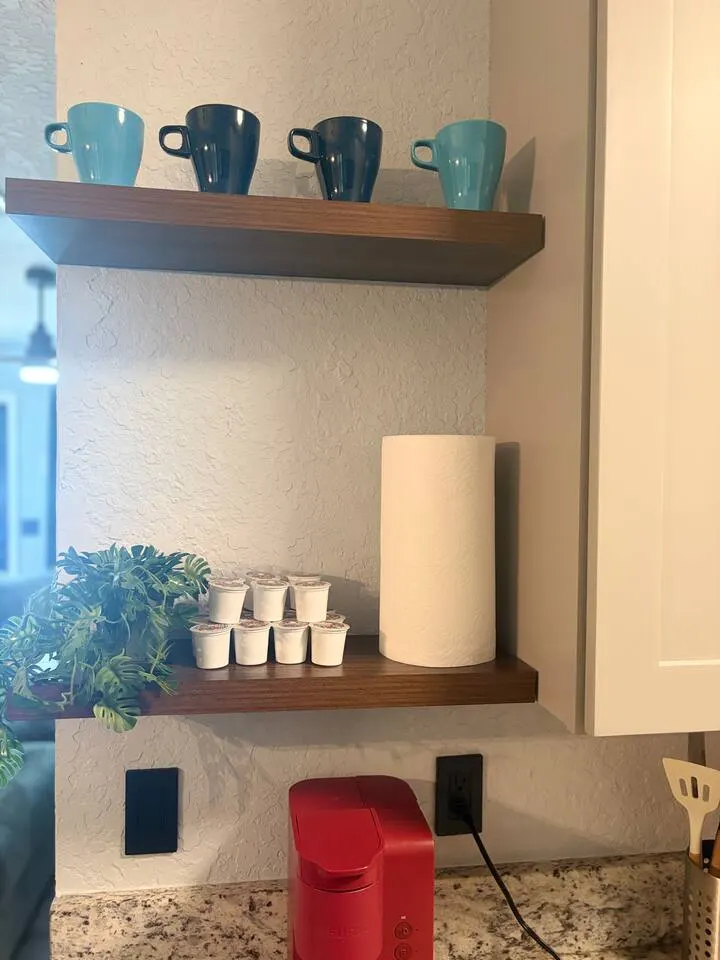
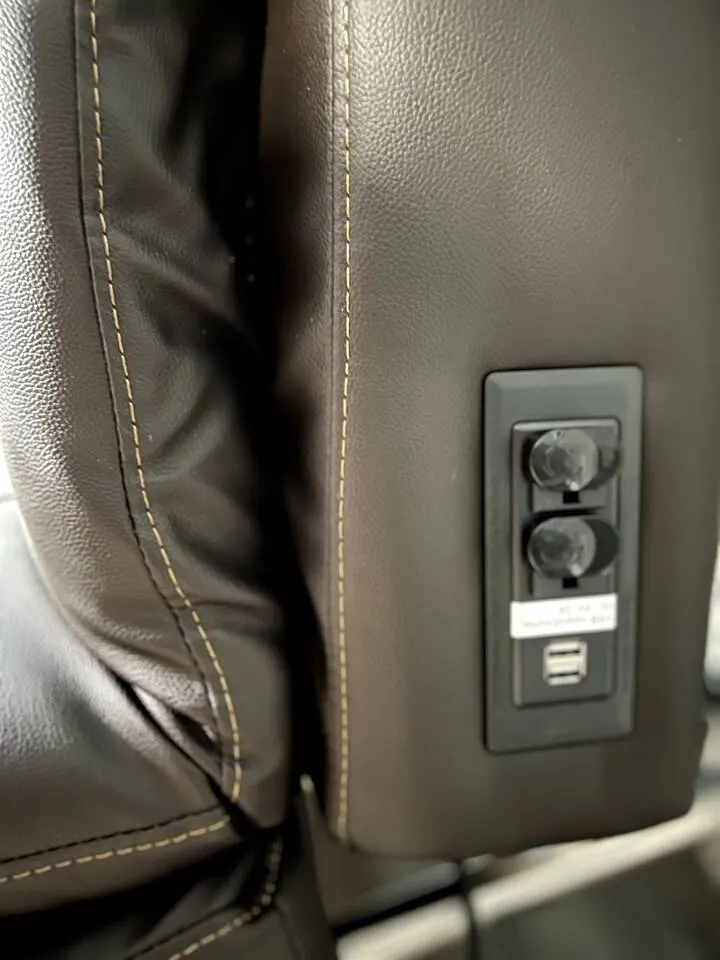
Charge every phone before you go. You need it for the countdown stream, the Space Coast Launches app, the Cocoa Beach parking app, your tickets and the photos. Save or screenshot your ticket barcodes before you leave the house, because phone reception on the wildlife refuge around the visitor complex can be poor. At Fruit Tree Home, a charging spot to rest and recharge makes this an easy habit.
Pack the beach bag even for a visitor complex day, so a scrubbed launch can turn into an afternoon on the sand at Cocoa Beach.
Launch day with kids and grandparents
A launch is one of the few things on an Orlando trip the whole family watches together, from the youngest to the oldest. Plan the day so the waiting is comfortable for everyone.
For kids
At the visitor complex, children's admission applies from 3 to 11, and the attractions, including the Planet Play area and the shows, fill the hours before a launch in operating hours. Explain the order of things before you go: the countdown, the flame, then the sound a few seconds later, and on landing nights a boom a few minutes after that. On the beaches, Jetty Park has a playground with shade structures, and Shepard Park in Cocoa Beach has a children's playground, restrooms and showers.
For small children who cannot manage a late night on the road, watch a night launch from near the house. The section on seeing a launch from Orlando explains when and where to look, and they are in bed a few minutes later.
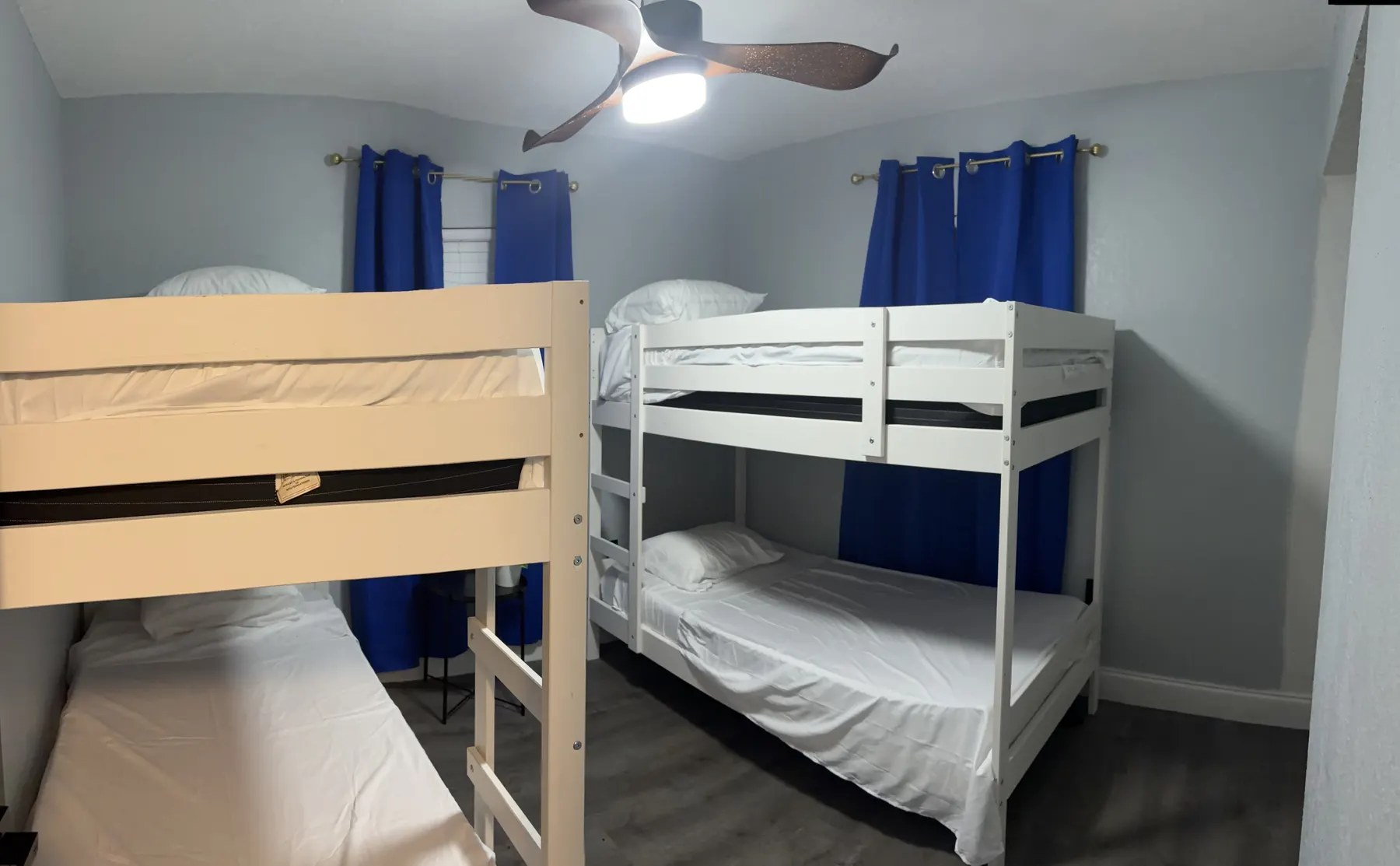
After a pre-dawn launch, everyone needs a nap. Downtown & Stadium Cozy Retreat, with its bunk rooms, and Amelia’s Arena Retreat both have blackout curtains in their bedrooms, which makes a late morning in a dark room possible after a 4 a.m. start.
For grandparents
Umbrellas and folding chairs make the wait easy, and the visitor complex's viewing areas have bleachers. At Jetty Park, free beach wheelchairs and mobility mats at Beach Entrance 2 help on the sand. For anyone who tires easily, the Titusville riverfront is a gentle choice, with chairs set up right by the water.
Back at the house, one level helps. Eight of our homes list themselves as single-level: Meet. Play. Stay., Piedmont, Entertainment Home, Game Day Getaway-Downtown Orlando, City and Stadium Sanctuary Vibes, Cozy Home, Wekiwa Home and BlueEarth. The listing photos of Downtown & Stadium Cozy Retreat also show a single-story house. Mention who is coming when you book, and we will point you to the right one.
Pairing the launch with a visitor complex day
If you are driving to the coast for a launch anyway, the visitor complex is the natural other half of the day. One-day admission includes Space Shuttle Atlantis and the Shuttle Launch Experience, the Kennedy Space Center Bus Tour with the Apollo/Saturn V Center, Rocket Garden guided tours, Gateway: The Deep Space Launch Complex, Heroes and Legends featuring the U.S. Astronaut Hall of Fame, Astronaut Encounter, Planet Play, Journey To Mars and the IMAX films.
A two-day admission is listed at $91 for adults and $81 for children 3 to 11, good for two uses within six months. For a launch trip, that is often the better buy: one day for the exhibits at your own pace, and one for launch day, when lines run longer. The visitor complex says launch days bring longer waits at attractions, restaurants, tours, restrooms and shows, and recommends arriving early.
Three ways to shape the day
- A morning or midday launch. Arrive at opening, watch the launch from the main complex or a bus-served viewing area, and spend the afternoon on the exhibits once the crowd thins.
- An evening launch. Spend the day at the complex, then move to the Titusville riverfront or stay for the visitor complex's own viewing, and drive home after dark.
- A launch with a beach day. Watch from Jetty Park or Cocoa Beach, and save the visitor complex for another day of the trip.
Our page on a day trip to Kennedy Space Center from Orlando has the visitor complex basics and every home's drive time on one page. For a second day trip from the same house in the same week, see our LEGOLAND Florida day trip. Add-ons at the visitor complex, such as the KSC Explore Tour and Chat With An Astronaut, are sold separately; book them for your non-launch day if you can.
Choosing a home for a launch trip
Any of our thirteen homes works as a base for a launch, so choose the house for your group first. These are the ones we would point a launch family to first.
 West Orlando
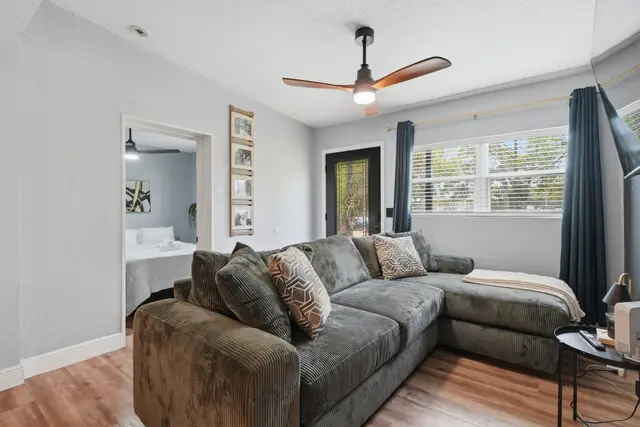
Meet. Play. Stay.
9 min downtown · 10 min ORMC · 12 min Universal
 Downtown Orlando
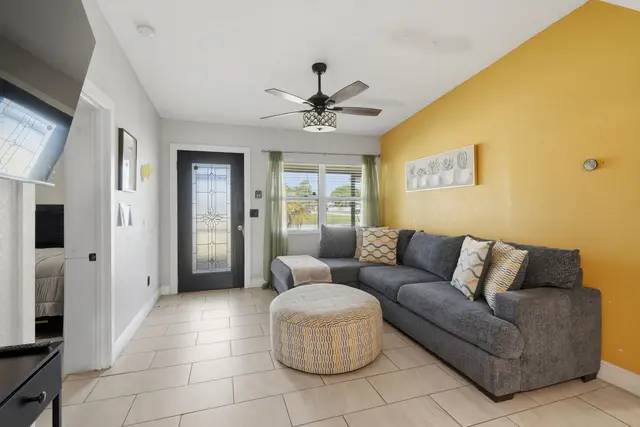
Amelia’s Arena Retreat
7 min downtown · 9 min ORMC · 16 min Universal
 Northwest Orlando
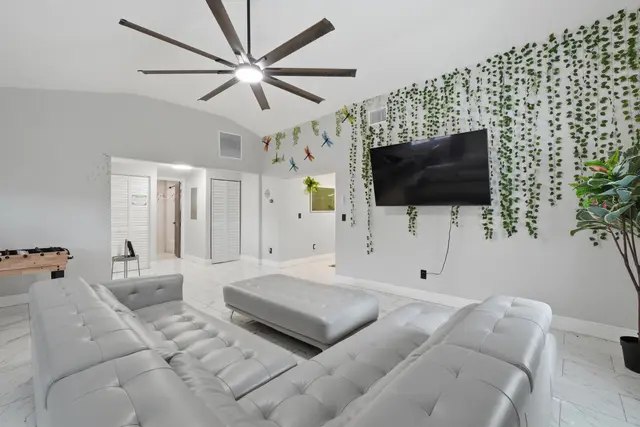
The Clue House
11 min downtown · 12 min ORMC · 14 min Universal
 West Orlando
Piedmont
11 min downtown · 11 min ORMC · 13 min Universal
Meet. Play. Stay. in Malibu Groves holds a 5.0 rating across 39 reviews. It has three bedrooms and two bathrooms, sleeps up to 9, and is all on one level, which suits a family bringing grandparents. Amelia’s Arena Retreat on the downtown edge is rated 4.86 across 7 reviews, has four bedrooms and two bathrooms, sleeps 8, and has the coffee station pictured above and blackout curtains in the bedrooms for the morning after a late launch.
Logan, who stayed at Meet. Play. Stay. in October 2026, wrote: "We had a great time during our stay. Everything was clean and prepared for us before we arrived. The house was also brand new and very spacious. Michelle was always checking up on us to make sure our stay was perfect. I would 100% stay here again anytime I’m in Orlando."
Bigger groups
For a reunion or two families traveling together, The Clue House has six bedrooms and three bathrooms, sleeps up to 15, and holds a 4.71 rating across 70 reviews. Piedmont has four bedrooms and three bathrooms, sleeps up to 14, and is single-level. Our guide to housing a reunion or a big group covers how larger groups split across homes, and the large group homes page lists the houses by size.
Dogs, parties and house rules
Every one of our homes lists pets as allowed in its house rules, and the pet-friendly rentals page explains how a stay with a dog works. A family watching the countdown together is a stay, while a launch party with outside guests is an event, and only two homes, The Clue House and Piedmont, have house rules that allow events. Just ask us.
To book, pick your dates on our live search to see which homes are open and their current prices. For a month or longer, or a group that needs more than one house, send us your dates and the launch you hope to see, and your rate is confirmed in writing when you ask. If you are not sure which house fits, our guide to which home is right for you matches each house to the trips people book, and the family vacation rentals page covers what a family stay includes.
Sources
- Kennedy Space Center Visitor Complex: Launch Viewing Locations
- Kennedy Space Center Visitor Complex: Scrub Policy
- Kennedy Space Center Visitor Complex: Preparing for Launch Days
- Kennedy Space Center Visitor Complex: What to Expect
- Kennedy Space Center Visitor Complex: Travel Information and Parking
- Kennedy Space Center Visitor Complex: Tickets
- National Park Service: Rocket Launch Viewing, Canaveral National Seashore
- National Park Service: Fees and Passes, Canaveral National Seashore
- Port Canaveral: Jetty Park Beach and Pier
- City of Titusville: Rocket Launches
- American Space Museum and U.S. Space Walk of Fame
- City of Cocoa Beach: Alan Shepard Park
- City of Cocoa Beach: Parking Information
- Visit Space Coast: How to Make the Most of Your Rocket Launch Experience
- Visit Space Coast: Launch Viewing Venues
- NASA: Launch Schedule
- NASA: NASA's Nancy Grace Roman Space Telescope Launches
- NASA: NASA Welcomes Record-Setting Artemis II Moonfarers Back to Earth
- NASA: NASA Marches Toward Artemis III Mission in 2027, Names Crew Members
- Spaceflight Now: SpaceX shifts away from Dragon launches at pad 39A as Starship looms
- Spaceflight Now: Blue Origin to add new Florida launch pads, seeks aggressive increase in New Glenn flight rate
- Spaceflight Now: Astrobotic showcases Griffin-1 lander ahead of environmental testing
- United Launch Alliance: Missions
- Spectrum News 13: Record number of Space Coast launches expected in 2026
- Spectrum News 13: SpaceX prepares for USSF-36 mission (sonic boom advisory)
- WKMG ClickOrlando: How to watch the Artemis II launch, from the beach to your backyard
- FOX 35 Orlando: Artemis II, no sonic booms, but Florida Space Coast will hear rocket's roar
- Florida's Turnpike Enterprise: FDOT Toll Rates, Central Florida (Beachline West and East)
- Central Florida Expressway Authority: Toll Rates
- Central Florida Expressway Authority: Frequently Asked Questions